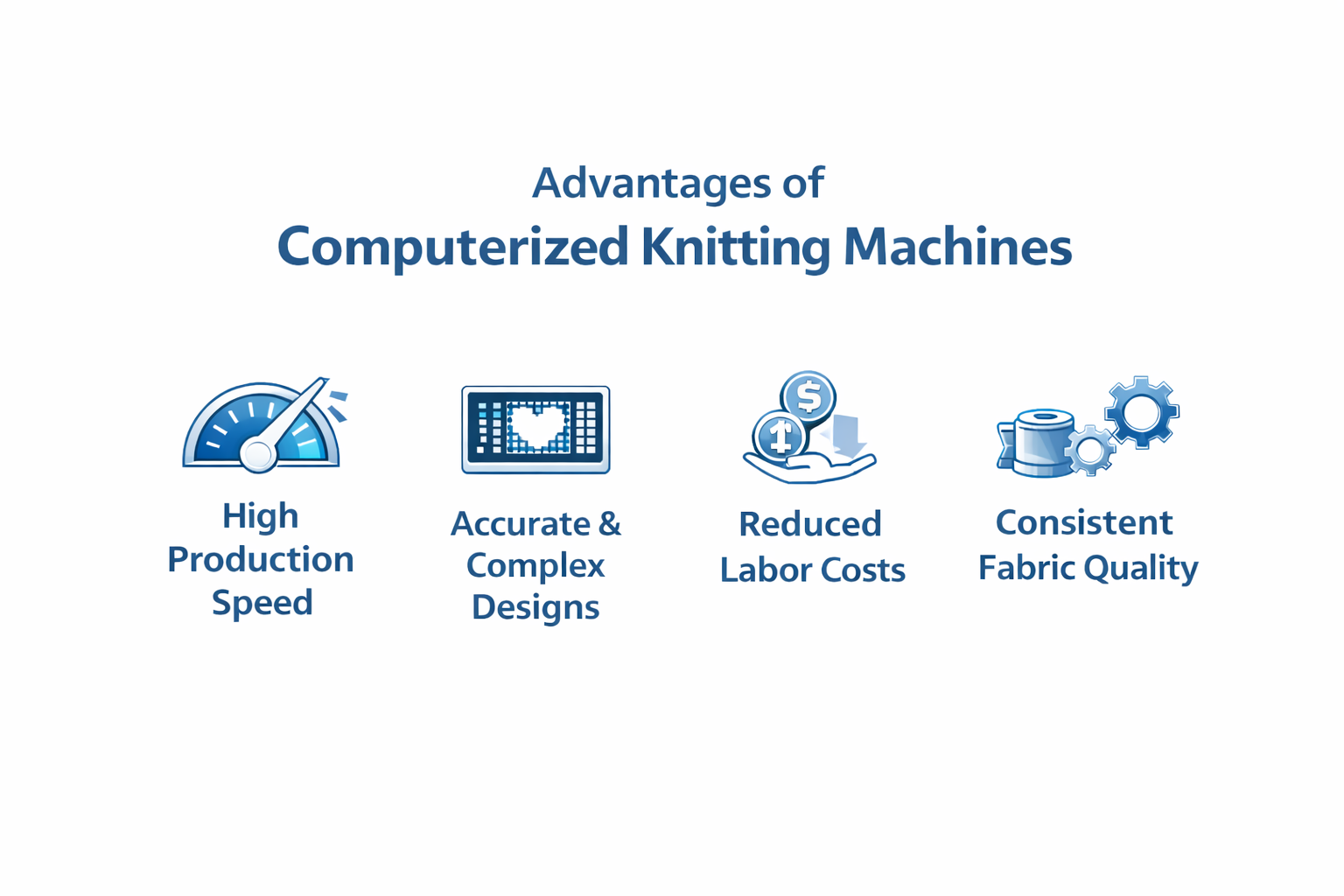
Advantages of Computerized Knitting Machines
Garment manufacturing runs on strict deadlines. Relying on manual tension adjustments destroys predictability. An operator gets tired during a long shift. Tension changes. An entire roll of fabric gets ruined. Upgrading to a computerized knitting machine solves this structural inconsistency immediately. The software dictates the exact mechanical pull on every single yarn cone. You stop guessing and start standardizing your output.
A standard knitting machine requires constant manual intervention. Cams need physical adjustments using hand tools. Needles break when the operator miscalculates the yarn gauge or the carriage speed. This leads to massive downtime. Factory managers cannot scale operations when output depends entirely on the physical stamina and focus of the floor workers. Human error eats directly into your profit margins.
When mill owners begin looking for a computerized knitting machine for sale, they are actually trying to buy production uptime. The difference in operational efficiency is measurable on the factory floor within the first week of installation.
Operational Efficiency Comparison
| Production Metric | Mechanical Systems | Computerized Systems |
| Pattern Setup Time | 4 to 6 hours | 5 to 10 minutes |
| Operator Ratio | 1 operator per machine | 1 operator per 4 machines |
| Fabric Defect Rate | High due to human error | Near zero with software control |
| Production Speed | Limited by manual checks | Continuous high RPM operation |
Eliminating Setup Delays and Labor Bottlenecks
Digital memory changes how you handle client orders. You receive a digital pattern file from a brand. You load it directly into the interface via a USB drive or local network. The computerized knitting machine reads the exact needle selection sequence instantly. There is no physical punch card to degrade or jam in the tracks.
Labor shortages severely impact textile mills today. Finding skilled operators who understand complex jacquard or shaping techniques is increasingly difficult. A basic knitting machine sits idle if the master technician is absent. Software removes this bottleneck entirely. The equipment executes the design perfectly as long as the yarn is loaded correctly onto the feeders. You reduce your dependency on specialized labor.
Minimizing Raw Material Wastage
You must evaluate raw material savings closely. Searching the market for a computerized knitting machine for sale requires analyzing how much yarn you currently throw away. Manual systems waste expensive material on test runs and tension errors.
- Exact software mapping prevents over-ordering raw synthetic yarns for specific production runs.
- Automatic tension sensors stop the equipment immediately if a thread snaps during high-speed operation.
- Exact panel shaping means you stop cutting and throwing away excess fabric on the cutting room floor.
The global apparel market demands extremely fast turnaround times. Brands drop new collections every few weeks. If your factory takes two days just to reconfigure a knitting machine, you lose those high-margin contracts. Digital systems allow you to switch from a heavy winter sweater panel to a lightweight ribbed collar in a matter of minutes. You stay agile in a demanding market.
Hardware Reliability and Fabric Output
Evaluating the secondary market is risky for factory owners. Buying a used computerized knitting machine for sale often means inheriting worn needle beds and outdated proprietary software. Software faults cause erratic carriage movements. This smashes needles and gouges the cylinder or flat bed metal. You need hardware built to tolerate continuous industrial shifts without these dangerous software glitches.
A modern computerized knitting machine monitors its own operating temperature continuously. High speeds generate massive friction in the cam box. The system alerts the operator before the metal expands beyond its tolerance and causes a mechanical jam. This self-diagnostic capability prevents catastrophic hardware failures.
The final fabric quality dictates your factory margins and brand reputation. A mechanical knitting machine produces too many B-grade rolls with vertical lines or dropped stitches. Buyers reject these immediately. Software-controlled stitch formation ensures every loop is identical across thousands of yards of fabric.
How We Protect Your Manufacturing Margins
We understand the intense pressure of hitting daily production targets. When a mill manager searches for a computerized knitting machine for sale, they are looking for a guarantee against costly downtime. We engineer our hardware to handle aggressive shift schedules without snapping needles or causing software faults.
Partner with us at Gagan Knit Fab to install a computerized knitting machine that actively scales your operations. We build the industrial equipment that secures your factory output.
Frequently Asked Questions
1. How many machines can one operator run?
A single operator can comfortably monitor four to six automated units simultaneously. The machines automatically stop and trigger an alarm if a yarn breaks or a needle jams.
2. Do these machines require special power setups?
Yes. Industrial textile equipment requires stable three-phase power. Voltage fluctuations will damage the sensitive control boards and servo motors.
3. Can I use any type of yarn?
The machines handle everything from fine silk to heavy abrasive synthetics. You just need to adjust the digital tension settings and ensure you are using the correct needle gauge for the specific yarn thickness.