Knit-N-Sew

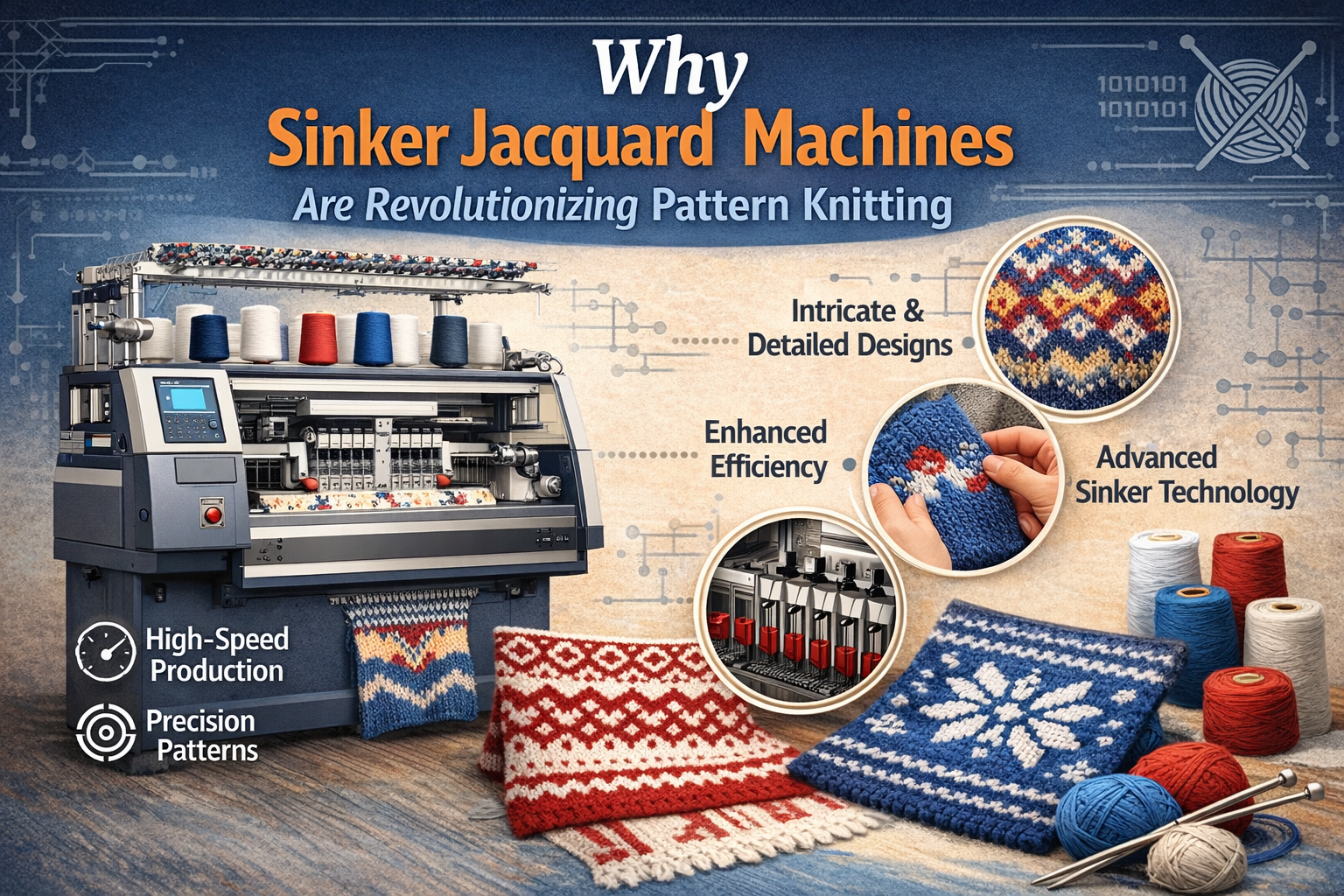
Why Sinker Jacquard Machines Are Revolutionizing Pattern Knitting

Why Sinker Jacquard Machines Are Revolutionizing Pattern Knitting

If you run a textile unit in India, you already know plain fabrics don’t sell the way they used to. Buyers want texture, colour combinations, and designs that stand out. And if you’ve been chasing those results with older cam-driven setups, you’ve probably felt the gap between what your machines can do and what the market demands.

That gap is where sinker jacquard technology steps in. Over the past few years, these systems have quietly changed how manufacturers in Ludhiana, Tiruppur, and Surat approach patterned knit fabrics, and the results speak for themselves.

How a Jacquard Knitting Machine Creates Patterns

A jacquard knitting machine uses individual needle selection to create patterns during the knitting process itself. Each needle can be independently controlled to knit, tuck, or miss a stitch, so you can program anything from simple stripes to complex multi-colour motifs without swapping mechanical parts.

In sinker jacquard systems, the sinker (a thin metal plate between adjacent needles) does more than hold fabric down while needles rise. It actively controls loop formation and stitch tension. When each sinker is electronically controlled, you get stitch-by-stitch precision that fixed-cam systems can’t match. The practical result is sharper colour boundaries, fewer floats, and a noticeably cleaner fabric face.

On a standard machine, sinkers follow a fixed path. They all move the same way at the same time, which is fine for plain single jersey but becomes a bottleneck the moment you need pattern variation within a single course. Electronic sinker selection removes that limitation entirely, and that is why sinker jacquard machines are revolutionizing pattern knitting across the Indian textile industry.

What Makes the Best Electronic Jacquard Worth the Investment

Not all electronic jacquard systems are built the same. Some manufacturers bolt a basic selector onto an older mechanical frame and call it “computerised.” Those machines usually run slower, break down more often, and limit your pattern repeat size.

The best electronic jacquard systems share a few traits. Selection speed keeps up with 25+ RPM. The software reads standard design formats like BMP or PAT files without proprietary conversion. And the hardware handles continuous production without overheating.

When you’re shopping for the best electronic jacquard, look beyond the brochure. Ask about pattern repeat capacity, colour-per-course limits, local spare parts availability, and 24-hour service support. In a market where downtime costs real money, those details matter more than any spec sheet.

Why the Circular Jacquard Knitting Machine Dominates Production

The circular jacquard knitting machine is the workhorse behind most patterned knit fabric produced globally. Running at 28 RPM with 72 feeders, a well-maintained circular jacquard knitting machine produces fabric at speeds flat-bed machines can’t touch. And because fabric comes off as a continuous tube, you skip the selvedge waste that plagues flat knitting.

Single jersey jacquard covers about 70 percent of Indian production needs, ideal for T-shirts, activewear, and innerwear. Double jersey jacquard, using both cylinder and dial, creates thicker reversible fabric for outerwear and technical textiles. That 30 percent of double jersey work is usually the higher-margin business.

Design changes on a computerised circular jacquard knitting machine take minutes instead of hours. Load a pattern file from USB, the machine maps it to needle positions, and you’re running the new design before your chai gets cold. Some systems even preview patterns on-screen so you catch errors before they become 200 metres of wasted fabric.

How a High Speed Electronic Jacquard Machine Pays for Itself

Speed is money in knitting. A high speed electronic jacquard machine uses piezo-electric or spring-return selectors that respond faster than older solenoid systems, maintaining 30+ RPM even on complex multi-colour patterns.

Here are rough numbers: upgrading from a mechanical jacquard at 18 RPM (about 120 kg per shift) to a high speed electronic jacquard machine at 30 RPM can push output to 190 or 200 kg per shift. That is 60 to 70 percent more fabric from the same floor space and the same operator. Factor in faster pattern changes and lower defect rates, and the payback period for most units falls between 18 and 30 months.

Speed does put more stress on parts. Sinkers and needles wear faster, and electronic selectors need periodic inspection. But a solid maintenance routine (daily oiling, weekly sinker checks, monthly electronics review) keeps a high speed electronic jacquard machine running smoothly for years.

Why Sinker Jacquard Machines Are Revolutionizing Pattern Knitting in India

Previous machine upgrades mostly improved speed or reduced labour. Sinker jacquard changes what you can actually make. Patterns that once required expensive imports can now be produced locally. Designs previously limited to slow flat-bed machines can be approximated on fast circular setups.

If you’re considering this upgrade, the machine is only half the equation. You need a supplier who understands the technology well enough to match the right configuration to your products.

That is what Knit N Sew has been doing since 1998. Based in Ludhiana, Knit N Sew supplies new and pre-owned circular knitting machines along with needles, sinkers, spare parts, and hands-on technical support. Whether you need a jacquard knitting machine for the first time or you’re upgrading from an older model, their team can match you with the right equipment. Reach them at (+91) 9814177799 or visit clonit.co.in.

Why Sinker Jacquard Machines Are Revolutionizing Pattern Knitting: FAQs

What is the difference between standard jacquard and sinker jacquard?

Standard jacquard controls only needles electronically while sinkers follow a fixed path. Sinker jacquard controls both needles and sinkers independently, producing sharper designs with fewer defects.

How much does a jacquard knitting machine cost in India?

New electronic models range from INR 15 lakh to INR 50 lakh depending on specs. Pre-owned machines cost less, and Knit N Sew offers both options.

What fabrics can a circular jacquard knitting machine produce?

These machines handle single jersey jacquard, double jersey jacquard, terry jacquard, interlock jacquard, and pique jacquard depending on configuration.

Is the best electronic jacquard worth the premium over mechanical?

For most manufacturers, yes. Faster pattern changes, lower defect rates, and the ability to take on higher-value orders make the best electronic jacquard a strong investment that typically pays back within two years.

How long does it take to operate a high speed electronic jacquard machine?

Experienced circular knitting operators pick up electronic jacquard basics in two to four weeks. Design software takes another week or two. Knit N Sew provides training with machine purchases.

backbone of pattern weaving

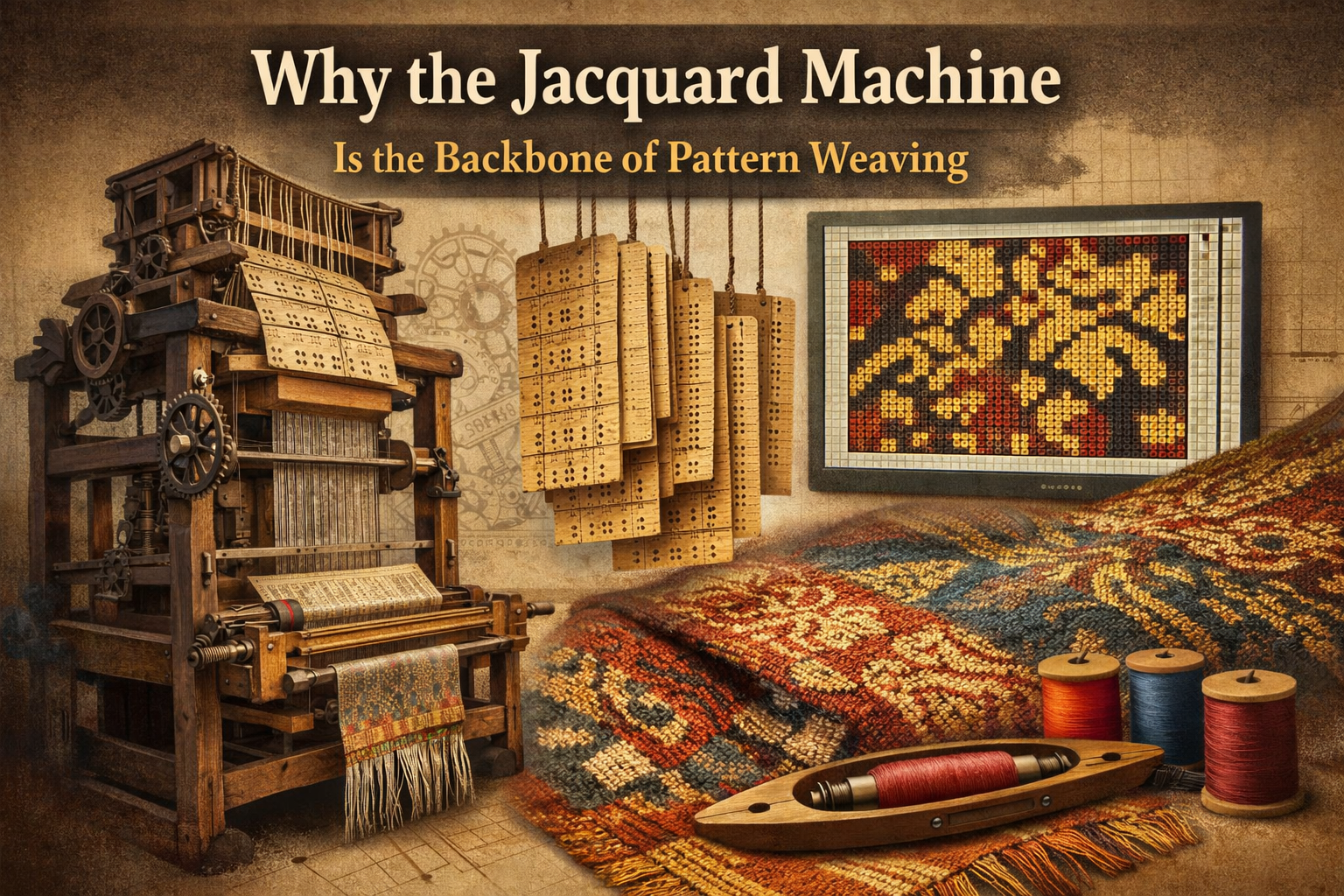
Why the Jacquard Machine Is the Backbone of Pattern Weaving

If you’ve ever looked at a patterned fabric and wondered how those precise designs get woven into cloth, the answer almost always traces back to one invention: the Jacquard machine. This technology, originally developed in the early 1800s, didn’t just change weaving. It changed how we think about automated production altogether. And for anyone running a textile unit today, understanding the jacquard knitting machine isn’t optional. It’s the difference between producing basic plain fabrics and creating the high-value patterns buyers actually want.

How the Jacquard machine became the backbone of pattern weaving

Before Joseph Marie Jacquard introduced his punch-card system in 1804, creating patterned fabric was painfully slow. A weaver would manually lift individual warp threads to form each row of a design. Complex patterns could take weeks, errors were common, and scaling up was practically impossible.

The Jacquard machine replaced that manual thread selection with punched cards. Each card told the loom which threads to raise and lower for a given row. String enough cards together, and you could program an entire pattern without the weaver thinking about individual threads. That was a genuine turning point. The Jacquard machine made patterns that were previously impossible into something any well-equipped workshop could produce.

What a jacquard knitting machine actually does

The principles behind Jacquard’s 1804 invention still run through modern pattern weaving. The technology has evolved from punch cards to electronic controls, but the core idea remains the same. Each needle gets individual instructions about when to engage and when to stay put.

A modern jacquard knitting machine controls each needle independently. Every stitch can be a different color or texture if the design calls for it. Compare that to a standard circular knitting machine, where all needles follow the same pattern repeatedly. The jacquard knitting machine breaks that limitation entirely. This individual needle control is precisely why the Jacquard machine is the backbone of pattern weaving.

Why the Jacquard machine is the backbone of pattern weaving in today’s market

Demand for patterned and customized fabrics has grown sharply. Sportswear brands want unique knit textures. Fashion labels want custom jacquard fabrics. Even home textiles have moved toward detailed patterns on curtains and upholstery. All of this runs on jacquard technology.

The jacquard knitting machine on circular production lines

On a modern electronic jacquard knitting machine, you upload a new design file and the machine reads it. A factory can run three different designs in a single shift without major downtime. Modern jacquard systems control thousands of needles simultaneously while running at high RPM, producing clean, consistent patterns roll after roll. There’s less yarn waste too, because each needle is individually controlled during color changes and transitions. For manufacturers working with expensive yarns like merino blends, the savings add up quickly.

The backbone of pattern weaving: from loom to knitting floor

The term “jacquard” has expanded well beyond its original weaving context. Today, the jacquard knitting machine applies individual needle control to knitted fabrics, not just woven ones. Knitted fabrics have different stretch, drape, and texture characteristics. A jacquard-knitted sportswear fabric can have breathability zones built right into the pattern. The backbone of pattern weaving, then, isn’t confined to one type of production. Jacquard technology has become the common thread running through woven, knitted, and technical textile manufacturing. That’s a big part of Why the Jacquard Machine Is the Backbone of Pattern Weaving, even in factories that primarily run circular setups.

What to look for in a jacquard knitting machine

Choosing the right jacquard knitting machine for your factory

Electronic control has largely replaced mechanical jacquard systems, and for good reason. Electronic offers faster pattern changes and more design complexity. Match your gauge to what your market actually demands, not what looks impressive on a spec sheet. Check compatibility with your existing circular knitting machines before you invest, since some jacquard systems need dedicated frames.

Software matters more than most buyers expect. The best jacquard knitting machine is only as good as the design software feeding it. And don’t underestimate after-sales service. Jacquard systems are more complex than standard machines, so you’ll need a supplier who provides spare parts, troubleshooting, and training.

The backbone of pattern weaving is also the bridge to better margins

Plain fabrics are commodities. Margins stay thin because you’re always competing on price. Patterned and specialty fabrics are a different story. Fewer manufacturers can produce them, so buyers pay more. A jacquard knitting machine lets you move up the value chain without tearing apart your existing operations. We’ve seen manufacturers recoup the cost of their jacquard investment faster than expected, simply because patterned fabrics sell for significantly more per meter.

Partner with Knit N Sew for your jacquard knitting machine needs

Whether you’re upgrading an existing circular knitting line or setting up a new unit from scratch, having the right machinery partner matters. At Knit N Sew, we’ve been supplying textile manufacturers in Ludhiana and across India with circular knitting machines, needles, and spare parts since 1998. Our team understands the practical demands of a knitting floor, and we work closely with our clients to match them with the right equipment for their production needs and budget. Reach out to us at clonit.co.in or call us directly to request a quote.

FAQs

What is a jacquard knitting machine?

A jacquard knitting machine controls each needle independently, allowing it to produce complex, multi-color patterns in fabric. It applies the same principles Jacquard introduced for weaving looms in 1804, adapted for modern knitting production.

How is a jacquard knitting machine different from a regular knitting machine?

A regular knitting machine moves all needles in the same pattern repeat. A jacquard knitting machine controls each needle separately, so every stitch in the fabric can be different.

Why is the Jacquard machine called the backbone of pattern weaving?

The Jacquard machine introduced individually controlling threads and needles using programmed instructions. This concept remains the foundation of all patterned fabric production today, whether woven or knitted.

Can a jacquard knitting machine work with circular knitting setups?

Yes. Jacquard systems are available as attachments for circular knitting machines or as dedicated jacquard circular machines that combine high-speed tubular production with pattern control.

Where can we get reliable jacquard and circular knitting machines in India?

Knit N Sew, based in Ludhiana, offers circular knitting machines, spare parts, needles, and technical support for textile manufacturers. Visit clonit.co.in to learn more or request a quote.

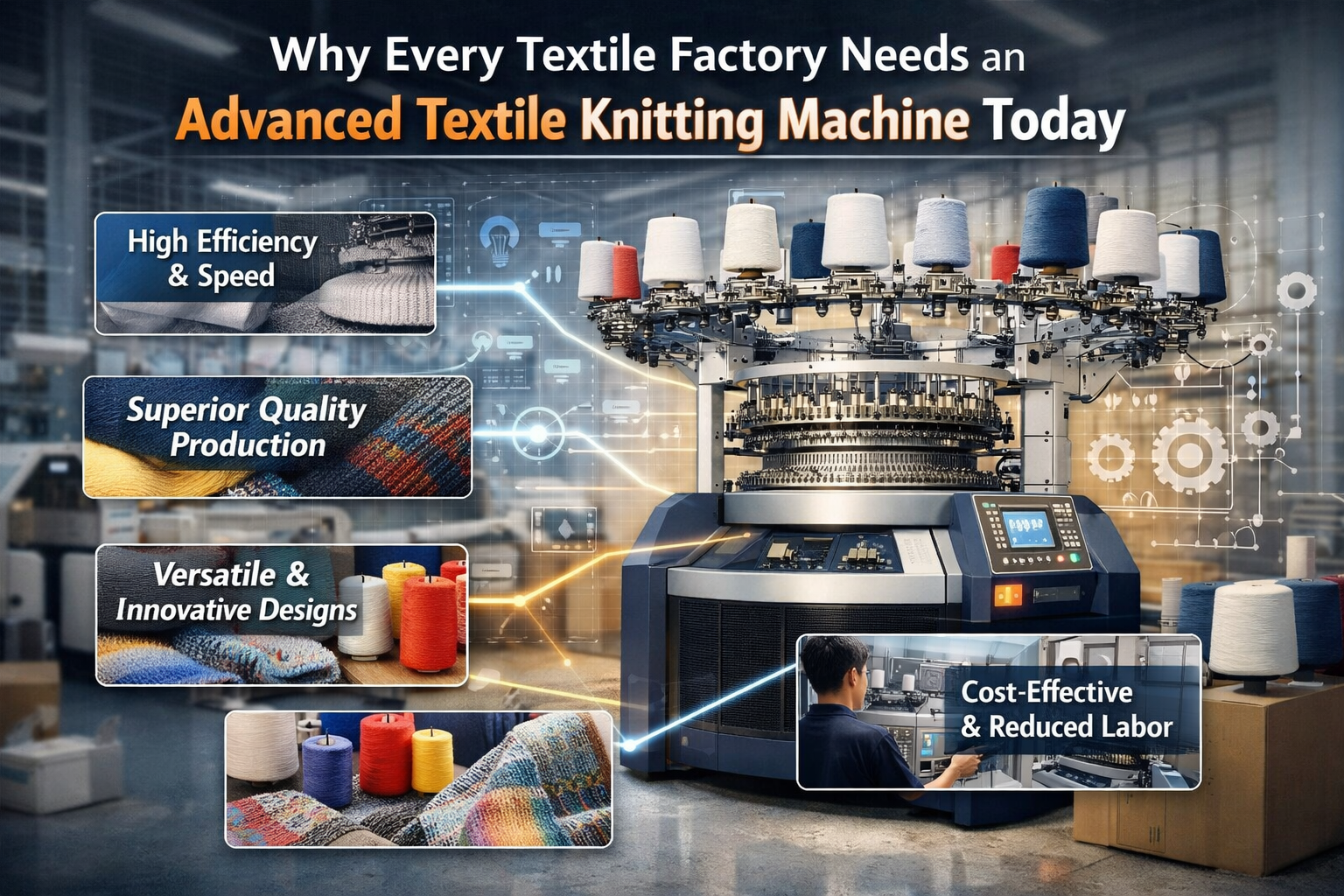
Why Every Textile Factory Needs an Advanced Textile Knitting Machine Today

Why Every Textile Factory Needs an Advanced Textile Knitting Machine Today

Most textile factory owners we’ve spoken to in Ludhiana say the same thing: machines that worked fine five years ago are now costing them money. Not because they broke down, but because they can’t keep up. Orders are tighter, margins thinner, and buyers who once gave two weeks now want delivery in five days.

If your production floor still runs on older equipment, you’re not just behind schedule. You’re behind the market.

Why every textile factory needs an advanced textile knitting machine today

Fabric buyers want smaller batches, faster turnarounds, and consistent quality across every roll. A textile knitting machine built for 2015 volumes simply cannot handle 2026 demands without creating bottlenecks.

Fast fashion cycles have shortened from months to weeks. Export clients run third-party audits that flag even small variations in GSM or loop density. Your workforce has shrunk because skilled operators are hard to find. An advanced knitting machine absorbs that pressure by automating tasks that used to depend entirely on a senior operator’s instinct and eye.

How does a modern textile knitting machine change daily output?

A modern circular textile knitting machine running at 25 to 30 RPM with 90+ feeders produces 350 to 500 kg of single jersey fabric per day. Older models manage 180 to 250 kg. That is double the output from the same floor space and operator count.

But speed is only part of the story. With older equipment, you lose 8 to 12 percent of production to defects like dropped stitches, oil stains, and uneven tension. A well-maintained advanced knitting machine brings rejection down to 2 or 3 percent. Over a month, that difference alone pays for the upgrade.

How does needle precision affect fabric quality in a textile knitting machine?

Older machines use standard latch needles that wear unevenly. After a few months, certain cylinder sections produce tighter loops than others, showing up as horizontal lines or shade variation after dyeing.

Modern machines use precision-ground needles with tighter tolerances. Some models let you swap needle types without retiming the entire machine, so you can switch between cotton, polyester, and blended yarns within the same shift. For a textile factory handling multiple fabric types, this flexibility removes hours of changeover time.

Energy savings: what it actually costs to run a knitting machine

An older 30-inch circular knitting machine consumes 5 to 7 kW per hour. A newer model of similar diameter uses 3.5 to 5 kW at higher RPM. Multiply that gap by 8,000 running hours a year, and you’re looking at savings of Rs 2 to 4 lakhs annually, depending on your state electricity tariff.

For textile factory operators in Punjab and Tamil Nadu, where power costs have risen 15 to 20 percent in three years, this is a real number that affects annual margins.

What to look for when buying a textile knitting machine?

Gauge and diameter: matching the knitting machine to your fabric type

A 24-gauge machine handles fine fabrics for T-shirts and innerwear. A 14 or 18-gauge suits thicker rib or interlock fabrics. Diameter affects roll width: 30-inch is standard for garment panels, while 34 or 36-inch works better for bedsheet fabrics. Get it wrong, and you waste material or lose orders.

Spare parts and service: the hidden cost of the wrong knitting machine

A machine is only as reliable as the supply chain behind it. If your knitting machine uses proprietary needles that take three weeks to import, every breakdown becomes a production crisis. Machines from manufacturers with local dealer networks in Ludhiana give you needles, sinkers, and cams within a day or two. That is the difference between a one-shift disruption and a week-long shutdown.

The real cost of outdated equipment in a textile factory

If you’re losing 10 percent of production to quality issues and your monthly output is worth Rs 25 lakhs, that is Rs 2.5 lakhs in wasted fabric every month. Over a year, it crosses Rs 30 lakhs.

Delivery delays cost clients. Export buyers penalize late shipments, and some cancel outright. Miss two or three deadlines, and that client goes to your competitor next season.

Labour cost is another factor nobody tracks properly. Older machines need experienced operators who manually adjust tension and catch defects by sight. Newer machines with automatic tension control let less experienced operators run two machines at once with fewer errors. Your per-machine labour cost drops almost in half.

Add it all up, and most textile factory owners find their “fully paid off” old machine costs them Rs 40 to 60 lakhs a year in hidden losses.

Choosing between new and used textile knitting machines

Budget matters. Not every operation can invest Rs 15 to 25 lakhs upfront. Used knitting machines from a reliable dealer can deliver 70 to 80 percent of new machine performance at 40 to 50 percent of the cost.

What matters is who you’re buying from. A good dealer will have already replaced or reground the needles, recalibrated the yarn feeders, and run the machine under load before showing it to you. Ask about the motor condition and whether they offer at least 3 to 6 months of warranty on parts. If they hesitate on any of that, you’re better off looking elsewhere.

FAQs

What types of fabric can a textile knitting machine produce?

Single jersey, rib, interlock, pique, fleece, terry, and mesh fabrics. The specific output depends on gauge, cam arrangement, and feeder setup.

How often does a knitting machine need maintenance?

Daily cleaning and oiling are necessary. Full service, including needle replacement and cam inspection, should happen every 3 to 6 months based on running hours.

Can a small textile factory benefit from an advanced knitting machine?

A two or three-machine setup with modern equipment can outperform a larger unit running five or six older machines, thanks to higher output per hour and lower fabric wastage.

Get in touch with Knit N Sew Enterprises

If your current equipment is holding your textile factory back, talk to the team at Knit N Sew Enterprises. They’ve been operating out of Ludhiana since 1998, so they know the local market and the kind of machines that actually hold up on Indian production floors. They deal in new and used circular knitting machines, stock needles and sinkers, and carry spare parts for the most common models. More importantly, they can tell you what your factory actually needs instead of just selling you the most expensive option.

advantages of computerized knitting machine

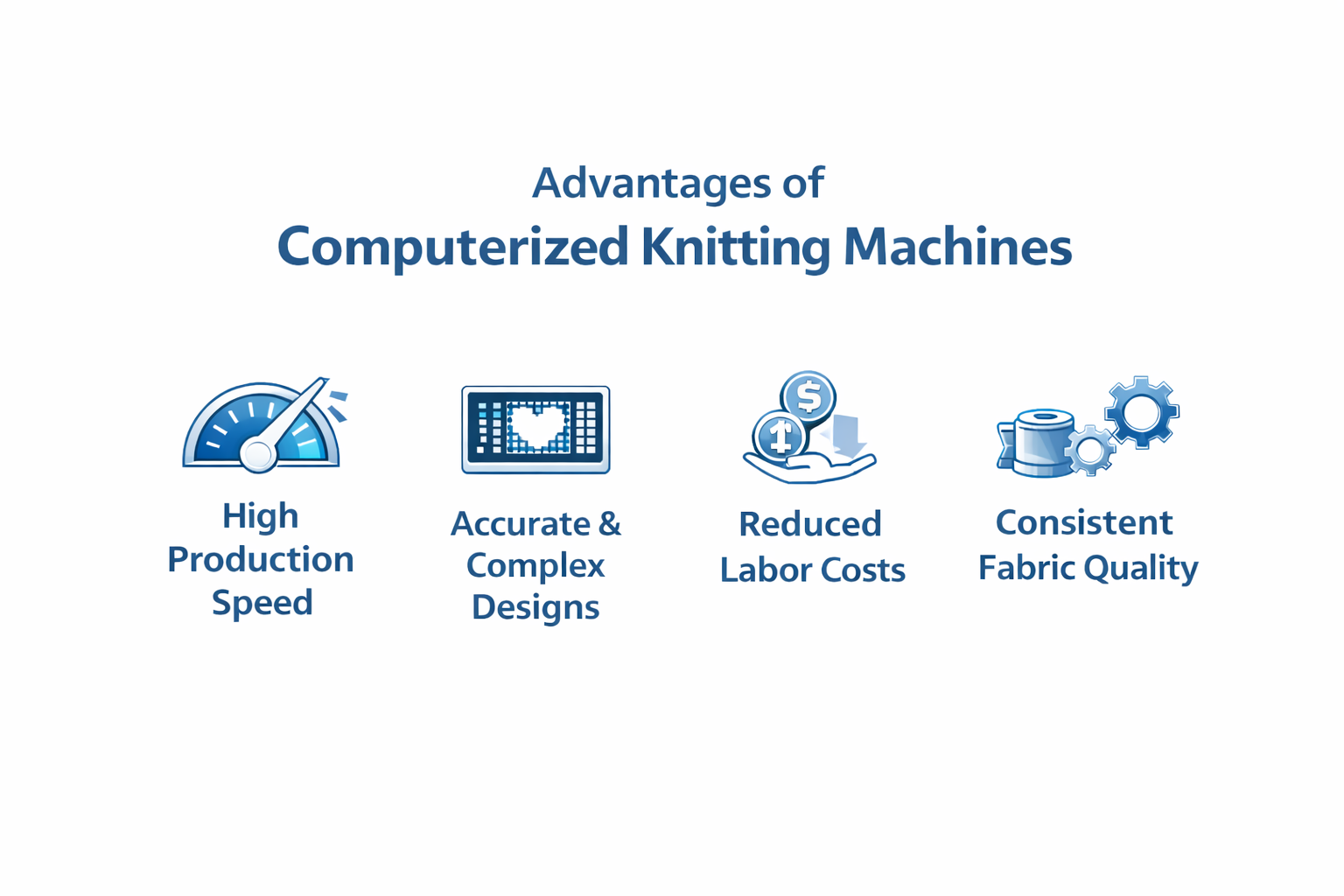
Advantages of Computerized Knitting Machines

Garment manufacturing runs on strict deadlines. Relying on manual tension adjustments destroys predictability. An operator gets tired during a long shift. Tension changes. An entire roll of fabric gets ruined. Upgrading to a computerized knitting machine solves this structural inconsistency immediately. The software dictates the exact mechanical pull on every single yarn cone. You stop guessing and start standardizing your output.

A standard knitting machine requires constant manual intervention. Cams need physical adjustments using hand tools. Needles break when the operator miscalculates the yarn gauge or the carriage speed. This leads to massive downtime. Factory managers cannot scale operations when output depends entirely on the physical stamina and focus of the floor workers. Human error eats directly into your profit margins.

When mill owners begin looking for a computerized knitting machine for sale, they are actually trying to buy production uptime. The difference in operational efficiency is measurable on the factory floor within the first week of installation.

Operational Efficiency Comparison

Production MetricMechanical SystemsComputerized Systems
Pattern Setup Time4 to 6 hours5 to 10 minutes
Operator Ratio1 operator per machine1 operator per 4 machines
Fabric Defect RateHigh due to human errorNear zero with software control
Production SpeedLimited by manual checksContinuous high RPM operation

Eliminating Setup Delays and Labor Bottlenecks

Digital memory changes how you handle client orders. You receive a digital pattern file from a brand. You load it directly into the interface via a USB drive or local network. The computerized knitting machine reads the exact needle selection sequence instantly. There is no physical punch card to degrade or jam in the tracks.

Labor shortages severely impact textile mills today. Finding skilled operators who understand complex jacquard or shaping techniques is increasingly difficult. A basic knitting machine sits idle if the master technician is absent. Software removes this bottleneck entirely. The equipment executes the design perfectly as long as the yarn is loaded correctly onto the feeders. You reduce your dependency on specialized labor.

Minimizing Raw Material Wastage

You must evaluate raw material savings closely. Searching the market for a computerized knitting machine for sale requires analyzing how much yarn you currently throw away. Manual systems waste expensive material on test runs and tension errors.

  • Exact software mapping prevents over-ordering raw synthetic yarns for specific production runs.
  • Automatic tension sensors stop the equipment immediately if a thread snaps during high-speed operation.
  • Exact panel shaping means you stop cutting and throwing away excess fabric on the cutting room floor.

The global apparel market demands extremely fast turnaround times. Brands drop new collections every few weeks. If your factory takes two days just to reconfigure a knitting machine, you lose those high-margin contracts. Digital systems allow you to switch from a heavy winter sweater panel to a lightweight ribbed collar in a matter of minutes. You stay agile in a demanding market.

Hardware Reliability and Fabric Output

Evaluating the secondary market is risky for factory owners. Buying a used computerized knitting machine for sale often means inheriting worn needle beds and outdated proprietary software. Software faults cause erratic carriage movements. This smashes needles and gouges the cylinder or flat bed metal. You need hardware built to tolerate continuous industrial shifts without these dangerous software glitches.

A modern computerized knitting machine monitors its own operating temperature continuously. High speeds generate massive friction in the cam box. The system alerts the operator before the metal expands beyond its tolerance and causes a mechanical jam. This self-diagnostic capability prevents catastrophic hardware failures.

The final fabric quality dictates your factory margins and brand reputation. A mechanical knitting machine produces too many B-grade rolls with vertical lines or dropped stitches. Buyers reject these immediately. Software-controlled stitch formation ensures every loop is identical across thousands of yards of fabric.

How We Protect Your Manufacturing Margins

We understand the intense pressure of hitting daily production targets. When a mill manager searches for a computerized knitting machine for sale, they are looking for a guarantee against costly downtime. We engineer our hardware to handle aggressive shift schedules without snapping needles or causing software faults.

Partner with us at Knit N Sew Enterprises to install a computerized knitting machine that actively scales your operations. We build the industrial equipment that secures your factory output.

Frequently Asked Questions

1. How many machines can one operator run? 

A single operator can comfortably monitor four to six automated units simultaneously. The machines automatically stop and trigger an alarm if a yarn breaks or a needle jams.

2. Do these machines require special power setups? 

Yes. Industrial textile equipment requires stable three-phase power. Voltage fluctuations will damage the sensitive control boards and servo motors.

3. Can I use any type of yarn? 

The machines handle everything from fine silk to heavy abrasive synthetics. You just need to adjust the digital tension settings and ensure you are using the correct needle gauge for the specific yarn thickness.

Jacquard Machine Luxury Fabrics

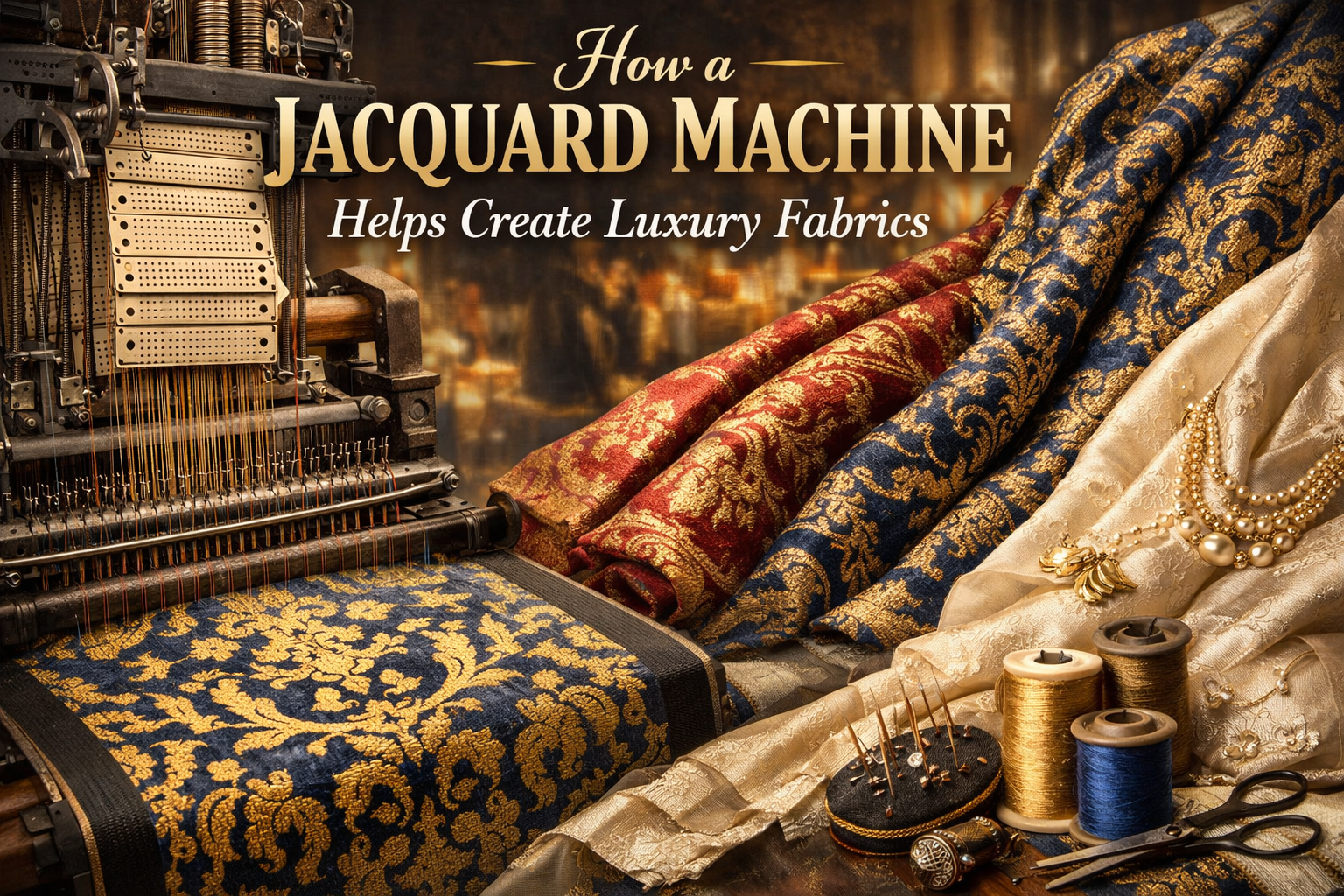
How a Jacquard Machine Helps Create Luxury Fabrics

Producing premium textiles requires absolute control over individual threads. Basic mechanical cams limit a factory to repetitive stripes or solid flat colors. The moment an apparel brand demands intricate floral motifs or custom logos woven directly into the fabric, standard equipment fails. This is where a jacquard machine becomes necessary. It bypasses simple cam limitations completely. It selects individual needles to pull different colored yarns precisely where the software dictates. Luxury fabrics demand high stitch density and complex color blending that manual systems simply cannot reproduce.

Upgrading Factory Output Margins

Factory floors operating on low margins need a way to upgrade their output. You cannot charge premium prices for basic jersey knits. Introducing an electronic jacquard machine changes the profit structure of a mill. You move from commodity production to high-value custom textiles. The initial capital investment translates directly into the ability to accept high-margin orders from luxury apparel brands.

Production Capabilities Comparison

Output Metric Standard Equipment Jacquard Equipment
Pattern Complexity Basic geometric shapes and stripes Intricate photographic motifs and logos
Color Blending Limited by feeder sequence Unlimited software-driven placement
Needle Selection Grouped cam mechanical selection Individual needle software selection
Market Positioning High volume commodity apparel Premium and luxury bespoke garments

Eliminating Mechanical Setup Delays

Operators used to depend on physical punch cards for creating patterns. That process was slow and highly prone to mechanical errors. Dust and oil ruined the physical cards mid-production. Today, an electronic jacquard machine reads digital files directly. The pattern data transfers via USB or local network cables. This reduces setup time from hours to minutes. Lead times shrink drastically. Mill managers can switch a production line from a heavy winter sweater pattern to a lightweight summer motif instantly.

Matching Hardware to Target Markets

Evaluating the different types of jacquard machine setups depends heavily on your target market. Some mills focus strictly on heavy upholstery and home furnishings. Others need fine-gauge equipment for high-end fashion garments. The physical size of the cylinder or flat bed dictates your maximum fabric width. You must match the hardware to the specific yarn count and fabric density required by your buyers.

  • Individual needle selection creates extreme variable tension on the yarn feeders.
  • Software integration allows for rapid prototyping of new seasonal collections.
  • Multi-color continuous knitting eliminates the need for post-production dyeing or printing.
  • Precise loop formation gives luxury fabrics their characteristic heavy drape and soft hand feel.

Managing Yarn Tension and Fabric Structure

Managing yarn floats on the reverse side of the fabric is a major production hurdle. When a specific color drops out of the pattern on the front, the yarn must travel across the back until it is needed again. If these loose threads are too long, the garment snags during wear. Luxury buyers reject garments with messy internal structures. The software dictates exactly when to tie down the loose threads into the fabric backing. This keeps the inside of the garment clean and structurally sound.

Preventing Structural Failure and Wastage

A standard knitting machine drops stitches when forced to handle too many yarn changes manually. You end up with a high defect rate and massive yarn wastage. Luxury brands reject rolls with visible vertical lines or uneven tension spots.

A dedicated jacquard knitting machine prevents this structural failure. The actuators engage needles with microscopic precision. Every stitch locks exactly where the designer intended. You must match the yarn tension perfectly when feeding multiple colors simultaneously. A slight drag on a single cone of yarn causes the entire pattern to warp. The fabric puckers. This ruins the drape of the final garment.

Equipment Durability Under Continuous Strain

The physical hardware takes severe punishment. The actuators that push the needles into position fire thousands of times per minute. Heat builds up rapidly inside the cam box. If the metal expands even slightly beyond its engineered tolerance, the needle selection misfires. A dropped stitch in a solid color fabric is bad. A dropped stitch in a complex multi-color luxury motif destroys the entire visual alignment. Factory managers cannot afford to stop production every hour to clean and recalibrate the needle bed. Dust from cotton yarns exacerbates this problem. Fibers pack into the needle tricks and act like cement when mixed with machine oil.

Handling Abrasive Synthetic Yarns

Knowing the exact types of jacquard machines suitable for abrasive yarns saves mills from constant parts replacement. Spandex and raw synthetic fibers cut through soft steel quickly. The needle tracks absorb the impact of continuous selection. Factory managers must ensure their equipment maintains exact dimensional tolerances. A vibrating needle bed destroys the intricate patterns of a luxury fabric. High-grade steel components prevent this structural degradation.

Pushing a basic knitting machine beyond its rated capacity burns out the motors and snaps needles. Luxury textiles require heavy fabrics with zero tension faults. If the fabric puckers or warps during the roll take-up, the entire batch is ruined.

Securing Premium Production Contracts

Brands inspect every roll of luxury fabric for tension uniformity and pattern accuracy. You cannot hide mechanical flaws in premium textiles. We understand the physical toll this demands from a factory floor. Investing in our robust jacquard machine secures your production quality against these strict industry standards.

We provide solutions that eliminate the guesswork from complex textile manufacturing. A modern jacquard knitting machine delivers exact reliability shift after shift. When your operations require industrial-grade equipment capable of scaling luxury output without failure, partner with us at Knit N Sew Enterprises. We protect your manufacturing margins.

Frequently Asked Questions

1.How does needle selection work in these systems?

Piezoelectric actuators read digital files and push specific needles into the active knitting track. This allows for independent control of every single stitch on the machine bed.

2. What yarns are best for luxury jacquard fabrics?

High-twist cotton, fine merino wool, and premium viscose blends produce the sharpest patterns. The yarn must have consistent tensile strength to handle rapid selection changes without snapping.

3. Does this equipment require specialized operators?

Yes. While the physical knitting is automated, the operator must understand the pattern software. They also need to monitor yarn tension specifically for complex, multi-color designs.

difference between circular and flat knitting machine

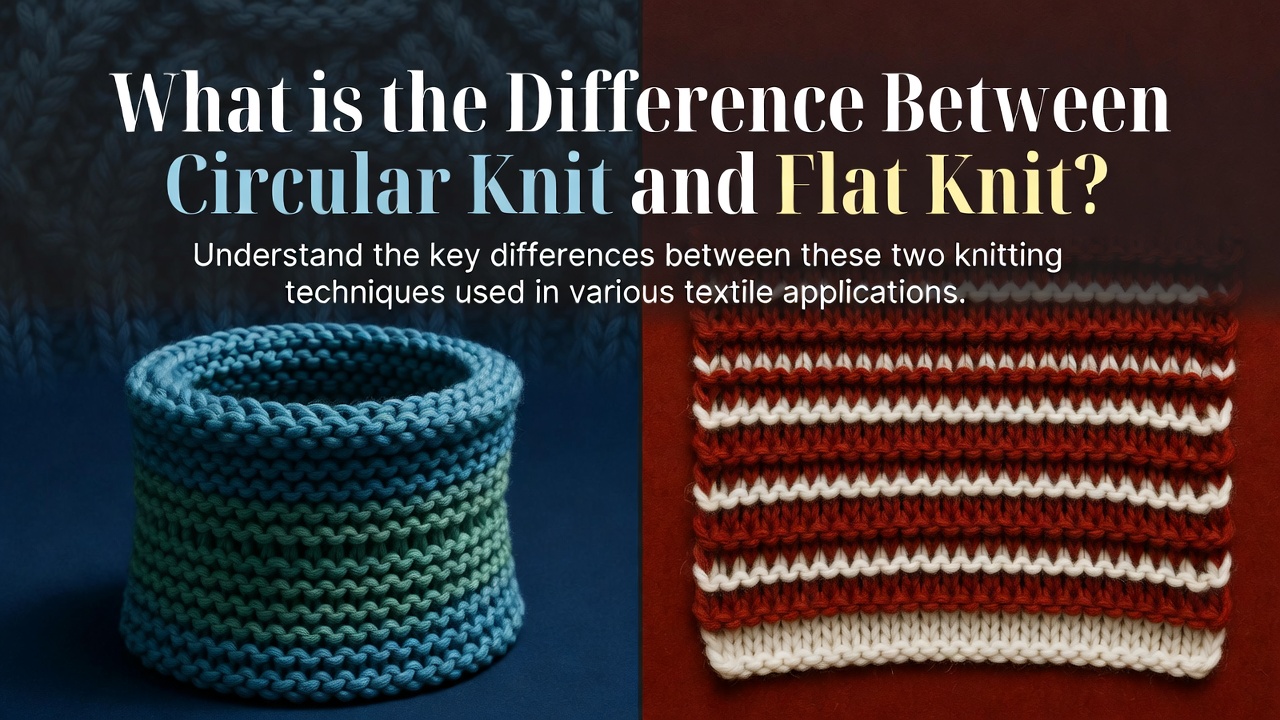
What is the Difference Between Circular Knit and Flat Knit?

The choice between Circular Knitting and Flat Knitting in the 2026 textile world is no longer just a technical preference. Instead, it has become a strategic decision that dictates a brand’s speed to market, design complexity, and sustainability footprint.

The fashion industry in the age of high technology is pivoting toward ‘Software-Defined Fashion’ and 3D Garment Construction.

Both Circular Knitting and Flat Knit create fabric by interlocking loops of yarn. However, they occupy entirely different ends of the manufacturing spectrum.

All About Circular Knitting

Circular Knitting is defined as the powerhouse of mass production. It involves knitting in a continual spiral to create a seamless tube of fabric.

A person is more likely if wearing a standard T-Shirt, Leggings, or Socks, to be donning the product of a Circular Knitting Machine.

How Does It Work?

A Circular Machine features

  • Needles arranged in a large cylinder.
  • Multiple yarn feeds (at times up to 100+) supply yarn to the needles. At the same time, it can produce fabric at extreme high speeds.

Main Characteristics of Circular Knit

  • FABRIC SHAPE: Always produced as a Tube. The tube for wide-width fabrics like those used for bedding is slit vertically, creating a flat sheet.
  • PRODUCTION SPEED: Extremely high. It is the gold standard for high-volume, low-cost (‘cut-and-sew’) garments.
  • TEXTURE: Results typically in lighter, smoother, and more elastic fabrics. Like for instance, single jersey, rib, or interlock.
  • LIMITATION: Prone to ‘spirality’. That is a slight diagonal twist in the fabric drain caused by the continual spiral motion. This can lead to twisted seams after washing.

All About Flat Knitting

An artisan’s choice for structure and detail, Flat Knit is a highly sophisticated textile technique. Its durability and precision gives it a superior edge.

A flat knitting machine unlike circular knitting continuous loop works back and forth across a straight needle bed, identical to the movement of a manual hand-knitter.

This method creates a stable, high-density fabric. The fabric holds its form and simultaneously, provides exceptional breathability.

How Does It Work?

  • Needles are set in one or two flat beds. They are often set in a ‘V’ shape. 
  • Carriage moves horizontally across these beds. They lay the yarn and form the stitches.

Modern computerized flat knitting machines are essentially 3D printers for yarn.

Main Characteristics of Flat Knit

  • FABRIC SHAPE: Produced as Flat Panels or ‘Fully Fashioned’ pieces. The shape of a sleeve of sweater front is knitted directly.
  • DESIGN VERSATILITY: Unmatched. It can produce intricate cables, 3D textures, intarsia patterns, and complex jacquards. 
  • THICKNESS: Used for heavier, more structured items. Like for instance, sweaters, cardigans, collars, and high-end knitwear.
  • SUSTAINABILITY: Can knit garments to shape. This produces significantly less textile waste (zero-waste knitting). Cutting shapes out of large circular fabric rolls on other hand produces considerable waste.

Comparison: Circular vs Flat Knit

    FEATURE  CIRCULAR KNITTING     FLAT KNITTING
Machine Type Circular Knitting Machine (Cylindrical) Flat Knitting Machine (Straight/V-Bed).
Output Shape Seamless Tubes (Tubular) Flat Panels Or 3D Shapes.
Best For  T-Shirts, Underwear, Activewear, Socks  Sweaters, Cardigans, Collars, Knit Shoes.
Speed  Extremely Fast (Mass Market) Slower (Bespoke / High-End).
Waste Level High Due To ‘Cut-And-Sew’ Low (Fully Fashioned, Zero-Waste).
Pattern Detail Limited To Overall Textures / Prints  Infinite (Cables, 3D Structures, Intarsia).

The lines between these two technologies by 2026 will blur more thanks to ‘hybrid’ manufacturing.

  • CIRCULAR SEAMLESS TECHNOLOGY: Circular machines today are more than capable of varying the stitch tension. They create body-mapped   compression in activewear. These mimic the shape of flat knitting. At the same time, maintain circular speeds.
  • 3D KNITTING (WHOLESALE GARMENT): Flat knitting machines can now knit at one piece an entire sweater. This includes sleeves and all, thereby eliminating the need for a sewing room entirely.
  • THE SUSTAINABILITY MANDATE: Brands are increasingly choosing Flat Knit for high-end collections. That’s because ‘Fully Fashioned’ reduces fabric scrap waste by up to 30 percent. This is critical metric for ESG reporting.

Which is Better Choice for Your Product?

Opt for Circular Knitting if:

  • You are producing high-volume basics. That is, 1,000 + units) where fabric softness and cost-per-unit are the main goals.

Opt for Flat Knit if:

  • You are creating a ‘hero’ piece with unique textures; 3D elements; or a premium tailored fit that needs minimal sewing.

Conclusion

Circular Knitting is termed as the ‘engine’ of the global wardrobe. It provides the affordability and comfort that people expect from daily essentials.

Flat Knit on the other hand is termed as the ‘architect’ of the wardrobe. It provides the structure, intricate beauty, and sustainability found in designer pieces.

A successful brand in the 2026 market will rarely pick only one choice. They opt for circular knits for the base and flat knits for the statement. By enlisting the expertise of Knit N Sew, textile companies can enhance their productivity and market reach.

FAQs

1. Which is more suitable for mass production?

Circular Knitting is significantly faster. It moves in one direction without halting to change rows. A circular machine can also produce large volumes of fabric, like jersey for T-Shirts. It can do so at a fraction of the time that a flatbed machine takes. This makes it the standard for bulk manufacturing.

2. Can a sweater on a Circular Knitting Machine be knitted?

Yes. However, it needs to be done with limitations. Circular machines are often used for lightweight, seamless sweaters. Else they are used for producing the raw ‘tubular’ fabric that’s later cut and sewn into a sweater.

A flatbed knitting machine is how preferred for structured sweaters with intricate cables, textures, or specific shaping (like a tailored shoulder).

3. Why is ‘Flat Knit’ regarded as more sustainable?

It supports ‘Fully Fashioned’ production. The machine knits each piece (front, back, sleeves) to the exact shape required. This results in almost zero fabric waste.

Circular knitting produces large rolls of fabric that needs to be cut into shapes. They leave behind significant textile scraps.

4. Are Flat Knitting Machines more suitable for complex designs?

A. Yes. Modern computerized Flat Knitting Machines offer unmatched design flexibility. They can execute Complex Intarsia, Jacquard, and 3D Textures like Honeycomb or Cables that are impossible or difficult to achieve on a standard circular machine.

5. Which among the two knitting styles is more comfortable for activewear?

Circular Knitting is typically favored. It is favored for activewear and base layers. Its ability to produce seamless tubes reduces the need for bulky side seams. This can otherwise cause chafing during movement.

Call Now Button