
Table of Contents
ToggleRunning a high-speed production floor reveals the harsh realities of mechanical wear. A single damaged needle creates hundreds of meters of defective fabric before the operator catches it. Finding the correct circular knitting machine parts requires knowing what actually breaks on the floor. Theoretical knowledge from a manual does not help when your machines are dropping stitches at 30 RPM. You need to understand the physical stresses applied to the metal.
The Core textile machine components That Drive Production
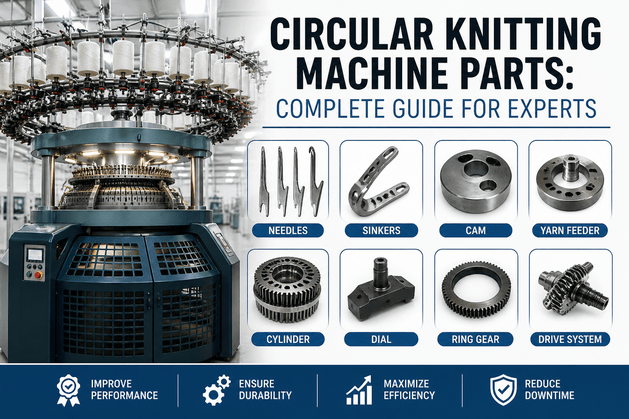
The cylinder holds the entire operation together. This large, grooved metal base dictates the gauge and diameter of your fabric. Cylinders are machined from specialized steel alloys with incredibly tight tolerances. We have seen cylinders warp from improper handling during a changeover. When that happens, the entire machine becomes useless.
Cams dictate the path of the needles. They wear out unevenly based on your most frequent stitch patterns. A knit cam takes more physical impact than a miss cam because it forces the needle to clear the old loop and form a new one. You must inspect cam tracks for micro-abrasions. Replacing these textile machine components requires precision calibration. You cannot just swap a cam and restart the motor. The clearance between the cam and the needle butt must be exact.
Understanding circular knitting machine parts and Wear
Needles and sinkers take the most abuse. They run at high temperatures. They constantly rub against synthetic or natural yarns. Lint management is a continuous battle in this zone. Cotton yarns shed short fibers. These fibers mix with the needle oil to create a dense sludge. If you do not clean this sludge, it hardens and pushes the needles outward.
Examining Primary circular knitting machine parts
Consider the needle latch. The latch opens and closes thousands of times a minute. The rivet holding the latch eventually wears out. When the latch becomes loose, it catches the yarn incorrectly and creates a defect in the fabric roll. Sinkers control the fabric loop during the stitch formation. If the sinker throat develops a groove from abrasive polyester yarns, the loop size will vary across the fabric width.
Extending the Life of Circular Knitting Machine Parts
Monitor your yarn tension constantly. High tension snaps needles. Low tension causes dropped stitches. Adjust the central stitch control based on the specific yarn batch you are running. Different dye lots of the same yarn often require tension adjustments.
Sourcing Reliable knitting machine spare parts
Downtime costs money. Waiting three weeks for a specific dial cam eats into your profit margins. Mill managers often try to save money by purchasing generic knitting machine spare parts. We advise against this practice entirely. Generic sinkers often have rough edges left over from the stamping process. Those rough edges cut delicate cotton yarns. Stick to exact specifications for your specific machine brand. The upfront cost is higher. The operational reliability makes up for that cost in a matter of days.
Essential circular knitting machine accessories for Optimal Output
Accessories do not interact directly with the yarn loop. They control the environment around the machine. Positive yarn feeders ensure consistent tension from the creel to the needles. If a feeder slips, the fabric weight changes immediately.
Creels hold the yarn cones away from the immediate knitting zone. Side creels save space on the floor. Overhead creels reduce lint accumulation on the cones themselves. Investing in good circular knitting machine accessories prevents feeding errors before the yarn even reaches the cylinder. Fabric spreaders and take-down rollers also fall into this category. If the take-down tension is uneven, the fabric roll will telescope.
Implementing Strict knitting machine maintenance
Continuous oil lubrication keeps these machines functioning. Running at high speeds generates massive heat inside the cylinder. Automatic oilers must be checked daily. You must use the correct oil viscosity. Using oil that is too thick causes needle stickiness. Using oil that is too thin fails to protect the metal from friction. We once walked onto a floor where a clogged oil line caused the needle butts to fuse to the cam track. The repair took four days and ruined a production run.
Proper knitting machine maintenance involves removing lint from the cylinder grooves every single shift.
Here is a basic checklist operators should follow on the floor:
- Check the automatic oiler reservoir level visually.
- Inspect yarn carrier tips for physical grooves caused by yarn friction.
- Use an air hose to blow lint out of the sinker ring. Do this carefully so you do not drive the lint deeper into the cam tracks, where it will bind the needles.
Specifics of hosiery machine parts
Sock manufacturing uses a much smaller cylinder diameter. The mechanical principles remain identical to large scale body size machines. The components are simply packed more tightly. You have select jacks and pattern actuators crammed into a four-inch cylinder space.
Handling hosiery machine parts requires specialized tools and patience. A bent selector jack in a sock machine ruins the heel pouch construction. The timing on these small machines is incredibly tight. A misalignment of a millimeter causes the yarn to miss the needle hook entirely. You cannot force components into place on a hosiery machine.
Managing a textile floor means managing friction, heat, and tension. You have to keep detailed logs of part replacements. If you notice needles breaking in the exact same slot every week you have a damaged cylinder wall. Pay attention to the physical signs your equipment gives you. Maintain your equipment with precision.
FAQs
When do we actually swap out knitting machine spare parts?
People always ask for a timeline. The manual says three to six months for needles. The real answer depends on your yarn. Running cheap polyester means you might need a swap in eight weeks. Cams last longer. You still have to physically check the tracks for scoring. Waiting for the fabric to show defects means you waited too long.
Which textile machine components fail the fastest?
Sinkers take a beating. Needles snap constantly due to friction. Yarn carriers get tiny grooves cut into them from the yarn passing through at high speeds. Once that groove forms, the tension gets completely erratic. Catching that early saves a massive amount of waste.
What happens if we skip daily knitting machine maintenance?
Cotton sheds short fibers. That lint mixes with the needle oil and forms a paste. It turns into cement inside the cylinder grooves if left alone. Blowing out the sinker ring has to happen every single shift. Do not skip this.
Can we use standard parts on sock machines?
Most people try to adapt standard components. Hosiery machine parts have a completely different scale and needle butt angle. It never works. You will just destroy the pattern actuators inside the small cylinder.
Spotting worn circular knitting machine parts early?
Look directly at the fabric coming off the take-down rollers. Do not wait for the quality control room to flag a roll. Vertical lines mean you have a sinker problem or a damaged needle hook. Stop the motor and pull the damaged component right then. Finding exact replacements for these machines dictates your uptime. You cannot run a profitable floor waiting on unreliable shipments. Sourcing your components through us at Knit n Sew (clonit.co.in) gives you the exact specifications required for continuous high-speed production.