
Table of Contents
ToggleWalk onto any modern factory floor today and you hear the difference. The machines run faster. Production managers are pushing cylinders to much higher RPMs just to maintain profit margins. This speed creates a massive problem with heat and friction inside the cylinder. When metal rubs against metal at these velocities without perfect alignment, components fail fast. Fabric defects happen instantly. You end up with needle lines that ruin entire rolls of fabric.
The margins for error simply do not exist anymore in textile manufacturing. Buyers in 2026 reject shipments for the smallest visual flaws. The industry has been forced to adapt.
The Demand for Precision Circular Knitting Machine Needles
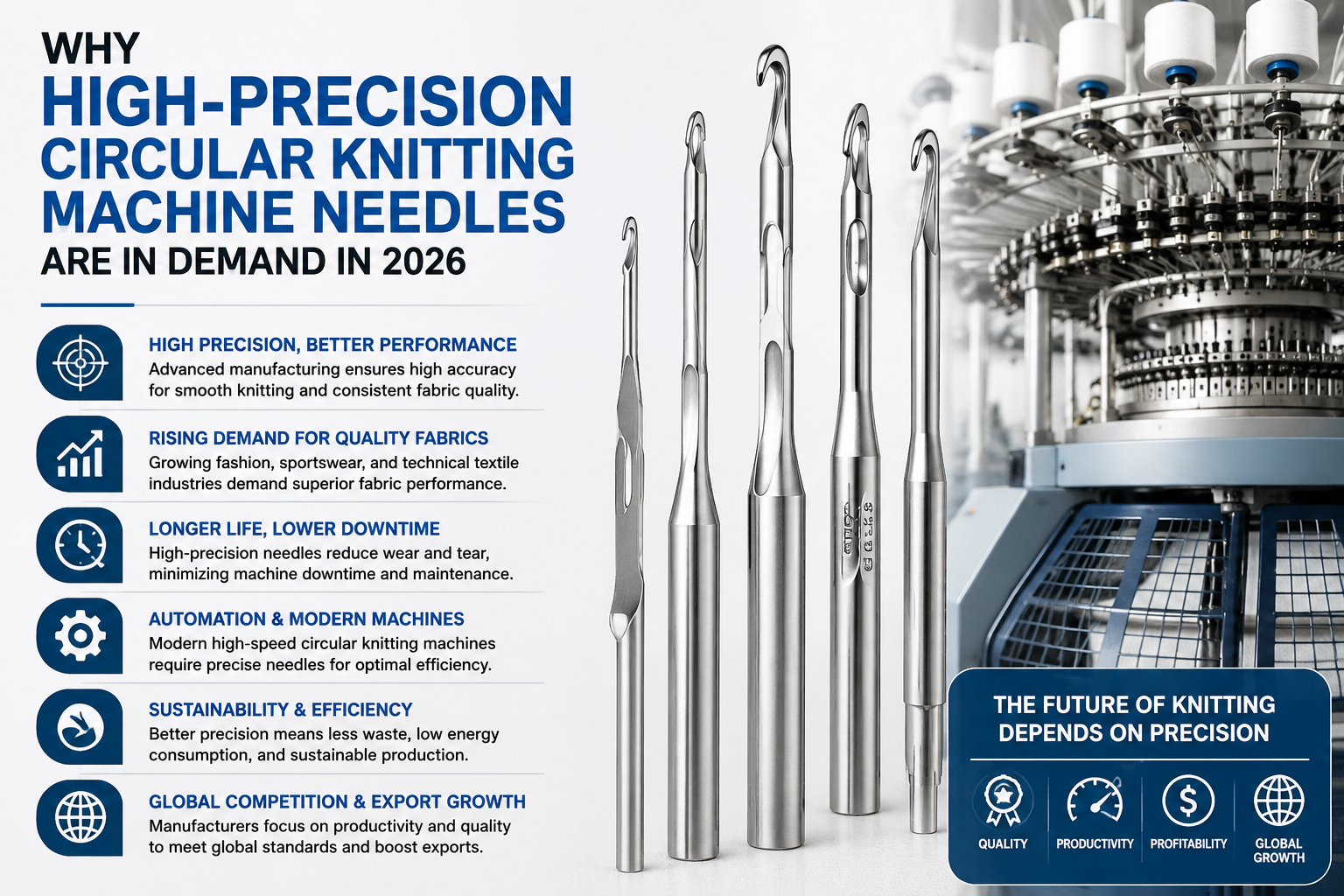
Fabric trends lean heavily on fine-gauge synthetics and recycled blends right now. These yarns are incredibly abrasive. They wear down hooks and latches much faster than traditional combed cotton. High-precision circular knitting machine needles are built with exact tolerances to handle this specific friction without warping. A variance of just a few microns in the hook determines whether a machine runs for a week straight or stops every few hours for a broken latch.
Factory owners know the real math. Stopping a machine to replace a single bent component costs significantly more in lost production time than the price of premium hardware. Buying high-precision circular knitting machine needles eliminates the constant micro-stoppages that kill daily output targets. The steel composition matters immensely when the machine is pulling elastane yarns at high tension.
How Different Knitting Machine Needle Types Handle High Speeds
You cannot use the exact same setup for every fabric. We see operators try this to save money on inventory. It never works. Selecting specific knitting machine needle types based on the yarn tension and fabric structure is a hard requirement on the floor. Latch needles with conical hooks distribute stress better during high-speed knitting. Spring beard options offer a completely different loop structure for specific knits.
Using the wrong knitting machine needle types leads directly to dropped stitches. The yarn slips right off the hook when the tension peaks. The latch might close a millisecond too late. That timing issue creates a hole in the fabric that cannot be repaired. You end up cutting out yards of waste.
Selecting Circular Knitting Machine Needles for Fine Gauge Fabrics
Fine gauge knitting requires extremely thin metal profiles. The space between slots in the cylinder is minimal. Finding hardware that maintains structural integrity while being incredibly thin is difficult. The steel needs a specific tempering process. It must flex slightly under yarn tension without snapping inside the track.
Identifying Wear in Circular Knitting Machine Needles Before Failure
Operators should feel the latches during routine stops. A loose rivet indicates internal wear. Replacing them before they break inside the cylinder prevents catastrophic damage to the surrounding slots and cams. You catch the problem before it damages the machine.
Why Standard Textile Needles Break on Modern Looms
Heat buildup is the main enemy of continuous production. Standard textile needles absorb this heat and lose their temper. The metal softens over a few days of continuous running. Once that happens, the hook bends outward from the constant pull of the yarn.
High-precision textile needles feature modified friction zones. They displace the heat instead of absorbing it. This keeps the hook rigid even after millions of loop formations. You can literally see the difference in the fabric surface. The loops look identical across the entire width of the roll. The fabric weight remains consistent from the start of the batch to the finish.
Upgrading to Circular Knitting Needles Industrial Specifications
A domestic or sample machine operates under completely different stress loads than factory equipment. The push toward circular knitting needles industrial standards is really about predictability. Mill owners need to know exactly how many hours a part will last before they schedule maintenance. Unplanned downtime destroys delivery schedules and upsets buyers.
When you install circular knitting needles industrial grade parts, the latches open and close with exact timing. The yarn clears the spoon cleanly every single time. There is no guessing if the machine will make it through the night shift. You turn it on and let it run.
The Hidden Cost of Budget Knitting Spare Parts
cheapest supplier. This creates nightmares on the production floor. Cheap knitting spare parts have inconsistent dimensions. One batch fits the cylinder perfectly. The next batch is too tight and causes the entire machine to seize up. It puts massive strain on the drive motor.
Sourcing reliable knitting spare parts eliminates these variables entirely. You get consistent cam wear and predictable yarn tension across all your machines. The mechanics spend less time tuning the dials and more time actually running the production orders. It protects the expensive elements of your machine like the cylinder walls and sinker rings. When sinkers and needles interact smoothly, the fabric comes out flawless.
Practical Needle Maintenance Textile Routines for 2026
You can buy the best hardware in the world and still ruin it with bad maintenance. The fluff from cotton and the fine dust from recycled polyester pack tightly into the slots. Good needle maintenance textile routines require high-pressure air and specialized flushing oils to push this debris out before it solidifies. Using the wrong oil viscosity just turns that dust into a thick paste.
If the slots get clogged, the parts cannot slide freely. They stick. The cams hit the butts at the wrong angle and snap them off completely. Proper needle maintenance textile schedules dictate cleaning cycles based on yarn type rather than time on the calendar. Running heavy spun yarns requires flushing twice as often as running smooth filament polyester.
Getting your production line up to modern standards takes more than just buying new yarn. The hardware inside the cylinder dictates the final quality of the fabric you ship to buyers. Finding components that actually match the speed and tension of your specific machines removes the guesswork from your daily operations. For mills looking to eliminate fabric defects and keep their cylinders turning without unexpected stops, upgrading your hardware through clonit.co.in provides the reliability required to stay competitive in today’s demanding textile market.
FAQs
What causes vertical lines in knitted fabric?
A bent hook or a stiff latch creates uneven loops during the knitting process. This shows up as a continuous vertical line down the fabric roll. Replacing the damaged component immediately solves the issue.
How often should we oil the knitting cylinder?
Lubrication depends heavily on machine speed and yarn type. Most high-speed industrial machines require continuous automatic lubrication with specific viscosity oils to prevent the metal components from overheating and seizing.
Can we use one needle setup for all fabrics?
No. Different yarns require specific hook shapes and latch sizes. Matching the hardware to the yarn prevents dropped stitches and extends the life of the cylinder slots.
Why do latches break off during production?
Latches usually break due to metal fatigue from high-speed impact or because dirt accumulation in the slot forces the latch to close at an unnatural angle against the cam.