
Table of Contents
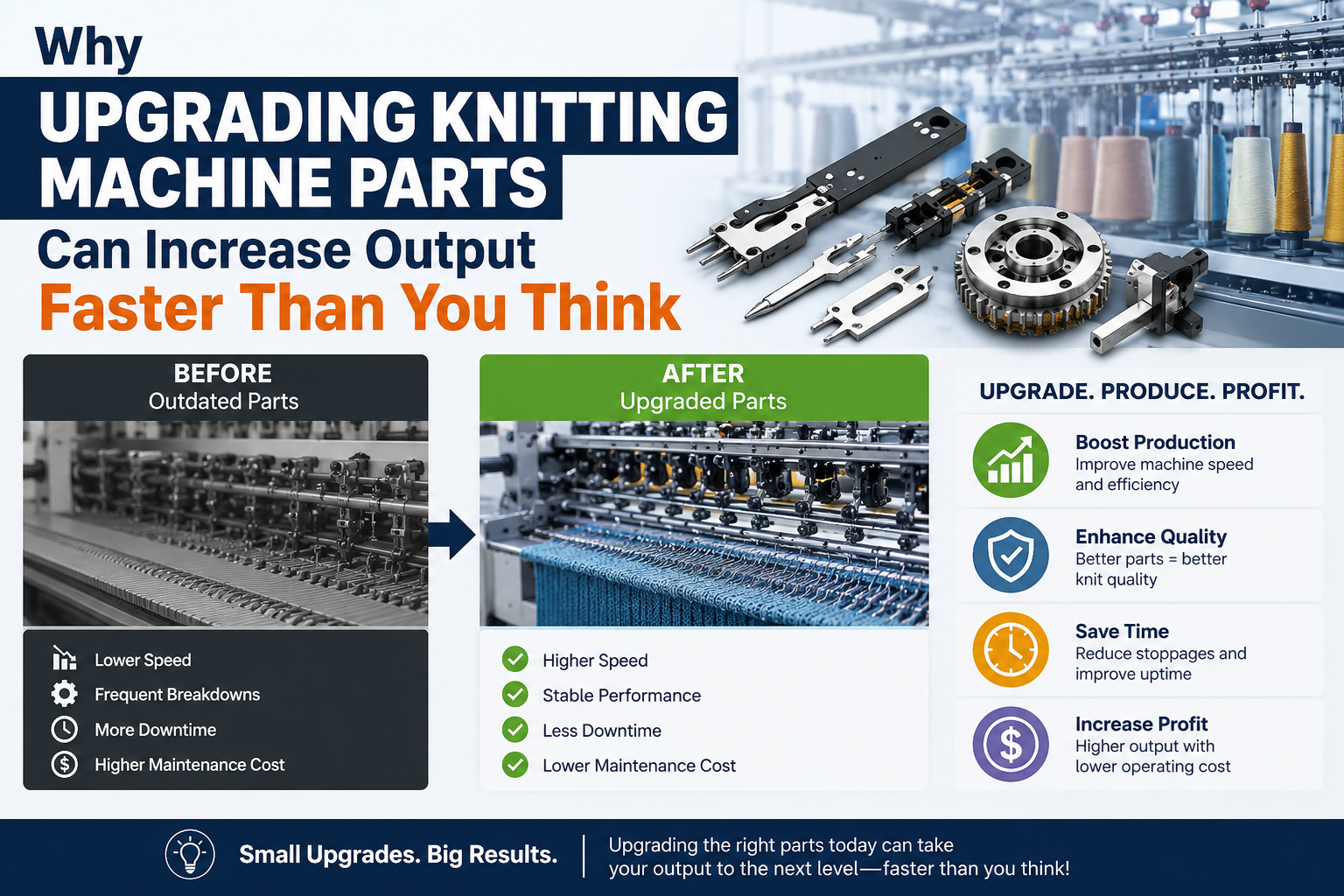
ToggleProduction managers often wait for a total system failure before they think about their machinery’s internals. It’s a reactive habit. We see a machine running, so we assume it’s running at its peak. But the truth is, gradual wear in minor knitting machine parts can sap our efficiency by 15% or more before we even notice a drop in fabric quality.
Upgrading isn’t just about fixing what is broken. It is about closing the gap between “operational” and “optimized.”
The Real Impact of High-Quality Knitting Machine Parts on Daily Yield
When we talk about increasing output, most people think about speed. They want to turn the RPM up. But if our knitting machine parts are worn, higher speeds just mean more friction, more heat, and eventually, more needle breaks.Replacing old needles, sinkers, and selectors with premium knitting machine components allows the machine to run more smoothly at higher velocities without the risk of downtime. Friction is the enemy of the textile floor. By using components with better surface finishes, we reduce the tension on the yarn. This means fewer yarn breakages. Every time a machine stops for a yarn break, we aren’t just losing the five minutes it takes to rethread; we are losing the momentum of the entire shift.
Why Precision Knitting Machine Parts Prevent Invisible Bottlenecks
Small deviations matter. A cam that is off by a fraction of a millimeter creates uneven loops. We might not see it with the eye until the fabric hits the inspection table. At that point, we’ve already wasted meters of yarn and hours of machine time.Investing in high-grade knitting machine parts ensures that the mechanical timing remains perfect. We have seen factories increase their “A-grade” fabric yield significantly just by swapping out standard cams for precision-engineered versions. It turns a “good enough” machine into a high-performance asset.
Choosing the Right knitting machine parts for Longevity
Not all replacements are equal. Using generic spare parts for knitting machines might save a few dollars today, but they often lack the heat treatment or metallurgical integrity of the originals. They wear out faster. They create micro-vibrations.
If we are serious about knitting machine repair, we have to look at the lifespan of the part, not just the purchase price. A needle that lasts 20% longer isn’t just a part saving; it’s a labor saving. Our technicians spend less time swapping out components and more time on preventative maintenance.We’ve worked on shop floors where “ghost” errors were constant. These are those frustrating machine stops where the machine just quits for no obvious reason. There is no broken needle, no obvious jam, and no error code that makes sense. You reset the machine, it runs for ten minutes, and then it stops again. We usually find these are traced back to cheap yarn feeders that cannot handle consistent tension. It’s a nightmare for a lead technician. You spend half the shift chasing a problem that shouldn’t exist. When we switch to high-end textile machinery parts, those ghosts tend to disappear. We get a steady hum instead of a stuttering production line.
The Financial Case for Upgrading Your Knitting Machine Parts Regularly
Most floor managers treat knitting machine parts as an “if it breaks” line item. That’s a massive financial leak. Think about yarn waste. When we run old, pitted yarn guides, the friction creates micro-neps or snaps the thread entirely. That’s raw material literally going into the trash. We’ve seen production lines lose 5% of their total output simply because they wouldn’t spend a few dollars on fresh knitting machine components.Then there’s power consumption. Worn bearings or misaligned cams increase mechanical drag. The motor has to pull more current to maintain the same RPM. Over a month of 24/7 operation, that spike in our utility bill often costs more than the industrial knitting machine parts we were trying to save money on. Upgrading isn’t just about speed; it’s about efficiency. High-quality textile machinery parts pay for themselves in reduced waste and lower power draws. It’s a simple math problem that many overlook until the end-of-year audit.
Reducing Downtime Through Strategic Knitting Machine Parts Maintenance
Most downtime is avoidable. It usually stems from a component that gave several warnings before it finally snapped. If our technicians are constantly performing emergency knitting machine repair, our output is already suffering.
A proactive upgrade cycle for industrial knitting machine parts, like yarn feeders and tensioners, keeps the flow consistent. Consistency is what actually builds profit in textiles. We want the machine to run for 24 hours without a single manual intervention. That only happens when every part of the stitch-forming process is in top condition.
Modern industrial knitting machine parts are built to handle the stresses of synthetic yarns and high-tension weaves better than the stock parts from a decade ago. It’s about material science. Old components often struggle with the heat buildup from modern high-speed cycles. Upgrading these specific areas can modernize an older machine for a fraction of the cost of a new unit.At Knit N Sew, we understand that our production schedule doesn’t have room for “maybe.” We focus on providing components that do more than just fit; they perform. Our goal is to help you hit those higher output targets by ensuring your machinery is equipped with the best possible hardware. We don’t just supply parts; we supply the reliability our floor needs to actually scale.
FAQs
1. How often should we replace our knitting machine needles?
Don’t wait for a break. If we are seeing tiny vertical lines in the fabric or feeling unusual vibration in the cylinder, the needles are already shot. In high-speed shops, we swap them on a schedule based on running hours, not just when the machine stops.
2. Can upgrading cams really increase our machine speed?
Absolutely. If our cams are worn or poorly profiled, the needles bounce at high speeds. That bounce causes dropped stitches and mechanical “chatter.” A smooth, high-precision cam profile lets the needle follow the path without jumping, which means we can safely crank the RPM without turning the machine into a scrap pile.
3. Why should we avoid generic spare parts?
They’re a gamble. A generic part might look identical to the OEM, but the heat treatment is usually where they cut corners. Once that part gets hot under a 24/7 load, it loses its hardness and starts galling. We save a few bucks upfront, but we’ll pay for it when that part shears off and takes out half a dozen other components with it.
4. What are the most critical knitting machine components to keep in stock?
Beyond needles and sinkers, keep selectors and yarn feeders handy. And ceramic eyelets. People forget about those, but a single cracked eyelet will shred our yarn and ruin our yield for hours before anyone even notices the damage.